
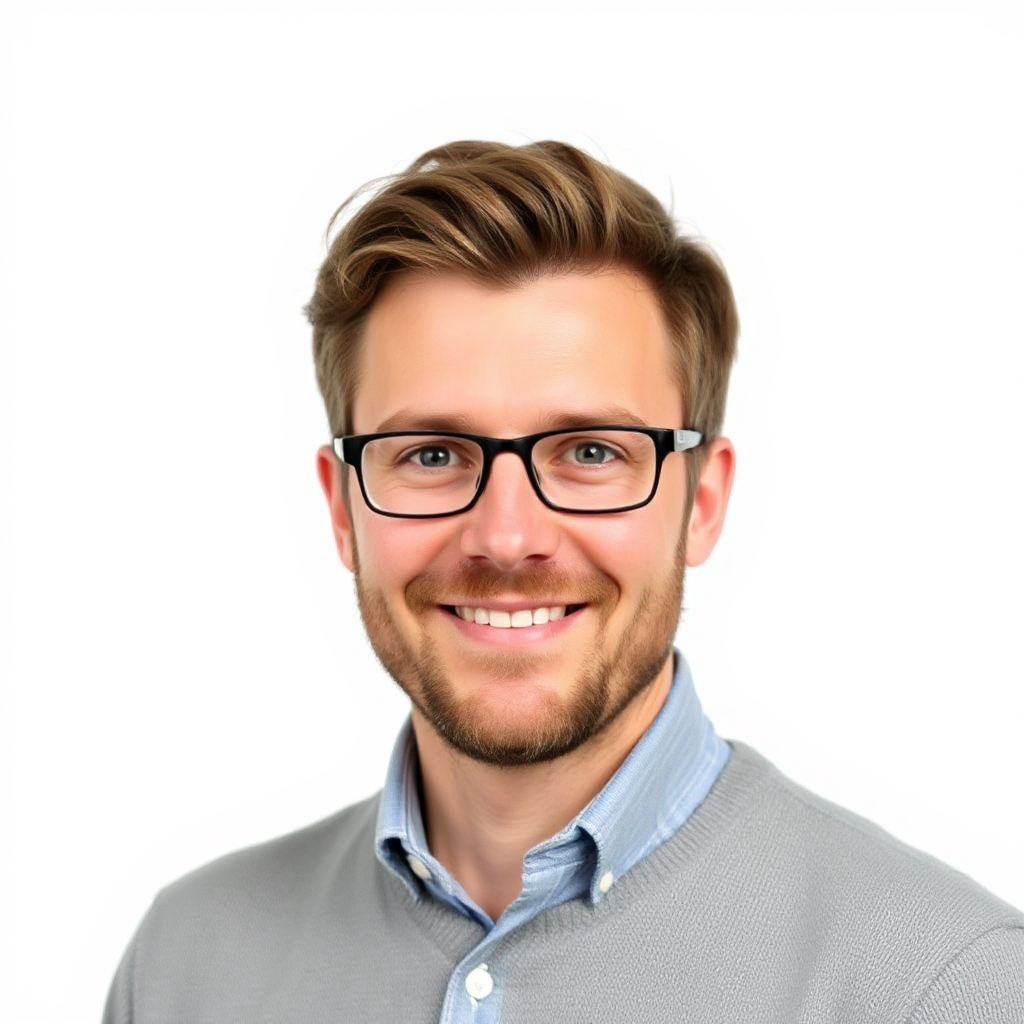

How does it feel to engage in talks with Russian representatives concerning the war in the region?
This question has generated considerable interest following multiple latest rounds of peace discussions, which have so far appeared to produce minimal progress four years after the comprehensive military offensive.
A further round of American-facilitated negotiations is expected to take place in Geneva later this week. Ahead of it, a key member of the Ukrainian leadership's delegation, Sergiy Kyslytsya, who has been involved in recent military-to-military discussions, has shared his viewpoint.
As stated by Kyslytsya, these dealings are business-like and generally free of the type of political and rhetorical posturing seen elsewhere by Russian leadership.
"The military have a better understanding of the realities in the battlefield," he stated in a conversation earlier this week.
"It's another thing if they [the Russians] are capable, or not, of reporting [back] accurately…free from cooking or changing the information," he added.
It is not an easy thing to try to halt a war. The nature of the front line in the Donbas region - where thousands of unmanned aerial vehicles operate and strike over a vast so-called "contested area" separating the two sides, while two hundred thousand Ukrainian civilians still live in the "heavily fortified" cities of the eastern region - renders the practical business of separation highly complex.
"It is essential to establish a clear framework of guidelines and procedures," the diplomat explained, "and a method to verify and oversee."
The Role of International Parties
A great deal of this work, he said, is finished, partly due to the direct participation of US officials, including General Alexus Grynkewich and Dan Driscoll.
It's obviously against Kyiv's benefit to criticise envoys of the American government, but when he praises the US delegation for its efforts, he comes across as genuine.
"We must credit the Americans for their dedication and their perseverance," he says, "because they sit in the meetings continuously. They not only watch…they put inquiries and they listen to our answers."
Kyslytsya was similarly complimentary about the roles played by the former president's adviser, whom he referred to as "experienced", and wealthy envoy Steve Witkoff, whom he described as "far more astute individual than the simplified image you see in the media".
The US, he asserted, will undertake a critical role in monitoring any potential truce, with capabilities including orbital and other forms of high-tech monitoring.
"It is necessary to have an entity who will play the role of adjudication, for the reason that if there is a violation there must be a third party that is solid [and] authoritative."

Previous and Current Monitoring Challenges
For eight years before Russia's full-scale offensive in recent years, this oversight function was played by the Organisation for Security and Cooperation in Europe - a group whose restricted means and absence of enforcement mechanisms rendered it mostly incapable of averting an intensification.
"It was no small feat [for them] simply to operate a couple of drones airborne above the territory," Kyslytsya said. "It resembles the Flintstones period in contrast with what we have now."
By contrast, latest analyses indicate that up to 12,000 unmanned aircraft are operating over the urban center of a frontline city at any one time.
An Insider's Account on Confronting the Opposition
Inquired about his ability to negotiate directly from delegates from a leader in the Kremlin who has been willing to expend more than a million-plus of his own men to conquer its neighbor, Kyslytsya, with extensive UN experience, offered his response.
He told that he'd had years of practice.
"I saw far more difficult situations. I spent a five-year term in New York, a portion prior to the full-scale invasion. I regularly had to be present with the adversary on a regular basis."
A particular night is seared in his recollection: the eve of the invasion.
In the middle of an emergency UN Security Council session, convened to address the urgent crisis in the country, the diplomat received news that his homeland was being assaulted.
At the same time, seven time zones to the eastward in the capital, initial distant explosions signaled as Russia's all-out assault on the nation commenced.
During scenes of agonising tension, Kyslytsya attempted to persuade Russia's ambassador, the Russian envoy, to contact his boss, Foreign Minister Sergei Lavrov, to obtain guarantees that Moscow's troops would not invade.
"I've already said everything I know today," the Russian diplomat responded, according to his Ukrainian colleague. "I will not wake the minister at this time."
The world changed at that moment. The diplomat remained at the UN for an additional period before returning to the Ukrainian capital.
The Road Forward
Should the negotiating teams reconvene in Switzerland this week, he will participate, still working through the details and logistics of a ceasefire but anticipating continuously for the crucial part of the jigsaw to be resolved.
"Hostilities might be stopped by simply a single order of an individual to his military chief of staff," he said.
"However, the Kremlin dictator [Vladimir Putin] is not up to ending the war at present."


